
Parish of the Holy Sacrifice
An Architectural Masterpiece of Modernism
The Parish of the Holy Sacrifice is a landmark of Philippine architectural history. As the first circular church and the first thin-shell concrete dome built in the country, it revolutionized religious spatial design by merging avant-garde structures with liturgical intimacy.
Chapter 1
Cross and Altar
Between Sacrifice and Resurrection: The Cross of Napoleon Abueva
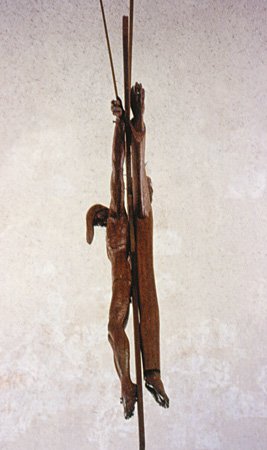
At the center of our parish, attention is immediately drawn to the Cross titled “Christ Crucified and Christ Resurrected” by Napoleon V. Abueva. Suspended above the altar, the sculpture appears to float beneath the dome of the church, becoming both the visual and spiritual focal point of the church. Unlike traditional crucifixes that only portray the suffering Christ, Abueva created a double-sided figure representing both the Crucified Christ and the Risen Christ in one form. Through this unique design, the artwork reflects our central Christian belief in sacrifice, death, and resurrection.
https://epa.culturalcenter.gov.ph/3/82/2168/
On the side of the Crucified Christ, suffering is expressed through the drooping head, outstretched arms, and visible tension in the body. The chiseled ribmarks and a contracted form emphasize pain and sacrifice. The Dead Christ also symbolizes the Holy Eucharist and the Word of God—the summit of worship and prayer that gathers the Catholic community. In contrast, the Risen Christ is shown in a calm and upright posture, symbolizing glory, purity, and divinity. By placing both images together, Abueva captures the passage between humanity and divinity, from suffering to triumph.
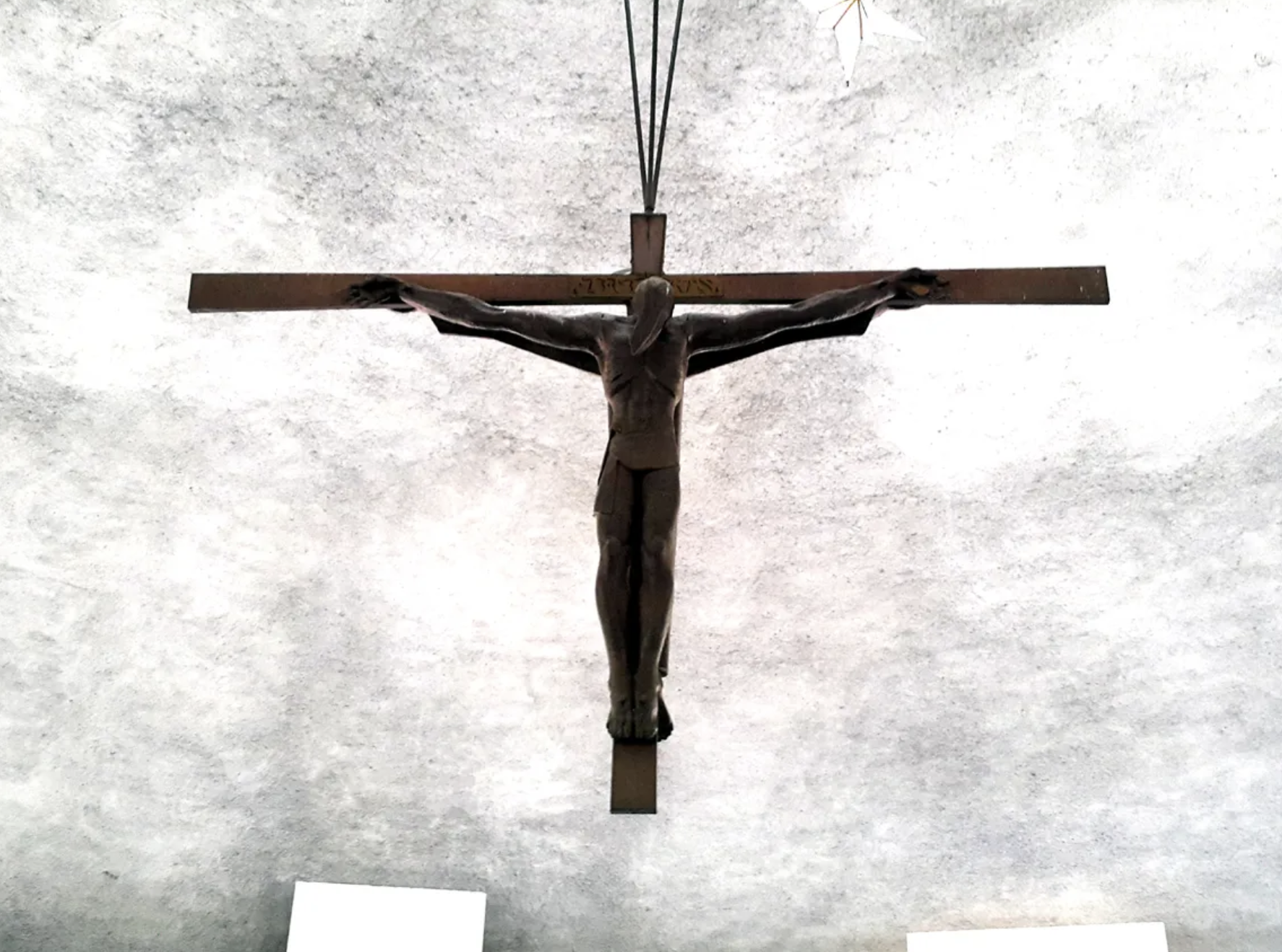
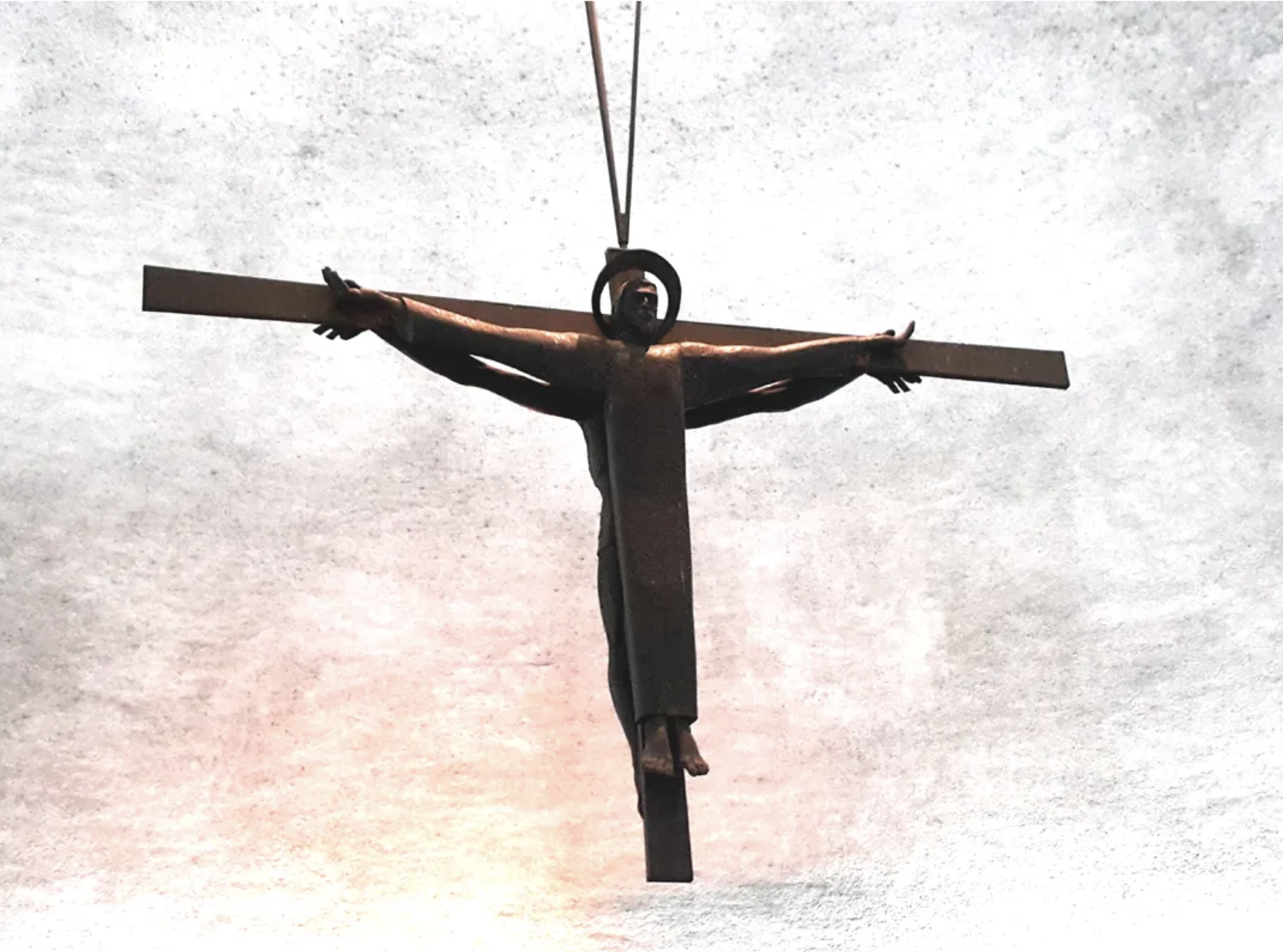
The Cross itself is carved from hardwood and is suspended by slender metal rods attached to the dome, giving it the appearance of floating. Natural light entering through the opening above further highlights the sculpture and strengthens its spiritual presence within the church. More than an artistic centerpiece, the Cross complements the circular architecture designed by Leandro V. Locsin and enriches the worship experience of the community gathered below.
Below the Cross lies the altar made of marble, which bears the Sermon on the Mount on one side—symbolizing the university’s role as a teaching institution that preaches truth and the good news. On the opposite side, a scene depicts a priest, nun, and parishioners teaching small children, illustrating the Church’s theology that the people gather around the Word of God and the Holy Eucharist, the summit of Christian worship and prayer.
Napoleon Abueva became one of the Philippines’ most influential sculptors and was later acclaimed as the “Father of Modern Philippine Sculpture.” Born in Tagbilaran, Bohol, in 1930, he studied at the University of the Philippines School of Fine Arts under National Artist Guillermo Tolentino. Although trained in classical sculpture, Abueva later explored modernist forms and techniques that became the defining feature of his works. His participation in the Parish of the Holy Sacrifice also became part of the larger collaboration among National Artists who shaped the church’s identity through art and architecture.
Abueva is known for expressing strong emotions and deeper meaning by only using simple and modern forms. His works often reflected Filipino life, culture, and spirituality, earning him recognition in the Philippines and abroad. In 1976 he was proclaimed as the National Artist for Sculpture, the youngest recipient of that distinction at the time. Through his works, Abueva introduced a modern sculptural language while preserving Filipino and spiritual themes. His contributions greatly influenced Philippine sculpture and continue to inspire Filipino artists today.
With Abueva's modern approach, the Cross became the symbol of our core Christian faith, and continues to draw the community to prayer and reflection. More than a masterpiece at the center of the church, the Cross remains the parish’s spiritual heart. To this day, it stands as a defining feature of the Parish of the Holy Sacrifice, a lasting reminder of faith, hope, and sacrifice.
References
- University of the Philippines Diliman. (n.d.). Parish of the Holy Sacrifice. Iskomunidad. Link
- Cajipe-Endaya, I. (2020, November 18). Crucifix. Cultural Center of the Philippines Encyclopedia of Philippine Art. Link
- Sculptour. (2015, January 22). Crucifixion: Napoleon Abueva. Link
- Lakansining. (2016, December 13). University of the Philippines, Quezon City: The art of the Parish of the Holy Sacrifice. Link
- Cajipe-Endaya, I. (2020, November 18). Crucifix. Cultural Center of the Philippines Encyclopedia of Philippine Art. Link
- Lakansining. (2016, December 13). University of the Philippines, Quezon City: The art of the Parish of the Holy Sacrifice. Link
- Sculptour. (2015, January 22). Crucifixion: Napoleon Abueva. Link
- University of the Philippines Diliman. (n.d.). Parish of the Holy Sacrifice. Iskomunidad. Link
- ArchDaily. (2016, June 2). AD classics: Parish of the Holy Sacrifice / Leandro V. Locsin. Link
- Lopez, M. (2021, September 12). Interview with Msgr Manny 210912 [Video]. YouTube. Link
Chapter 2
Dome Church
A Church Open to the Light
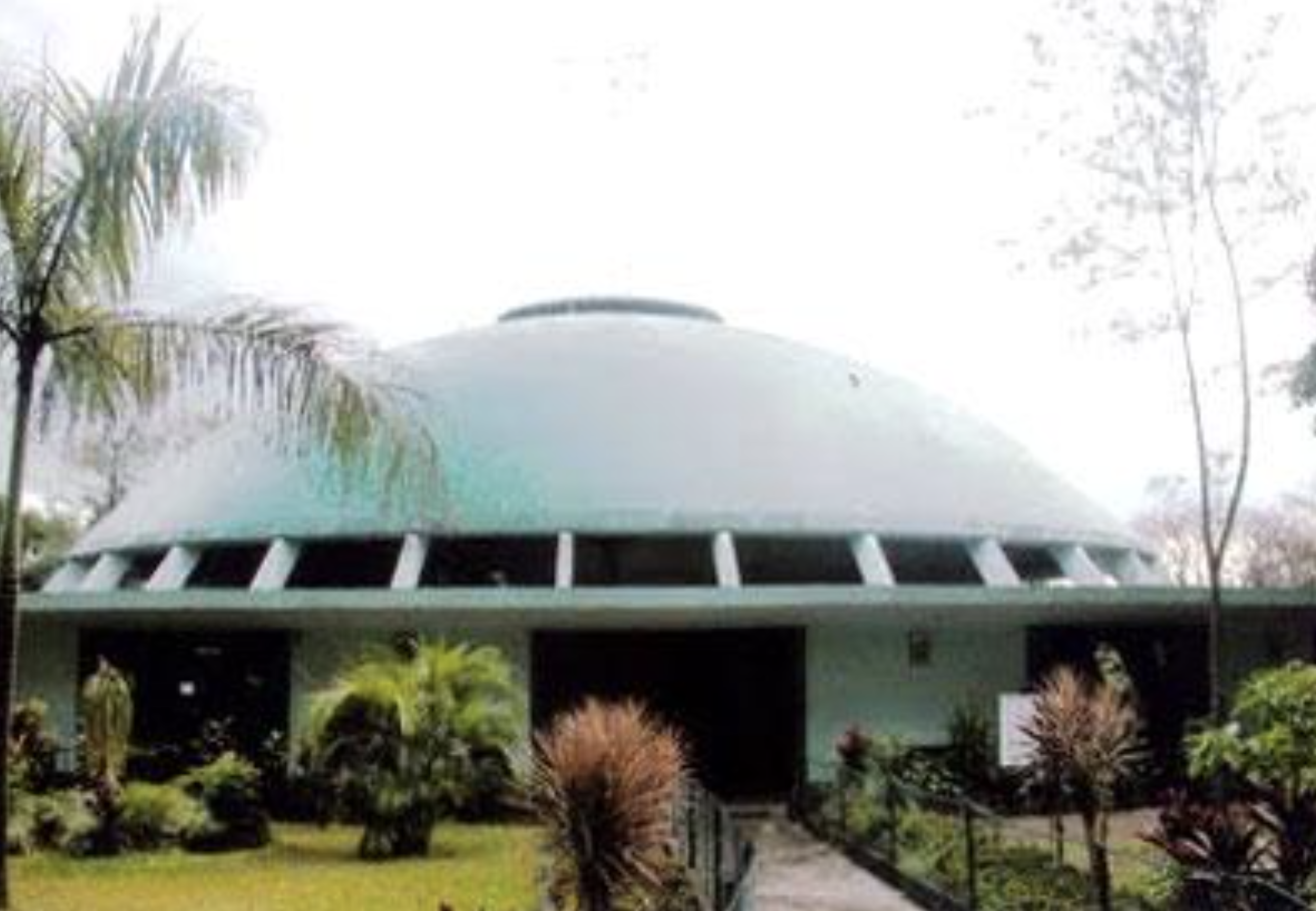
As you approach the Parish of the Holy Sacrifice, its extraordinary architecture immediately stands out. Unlike traditional churches with long aisles and enclosed spaces, the parish is recognized for its open, light-filled, circular structure. Designed by Leandro V. Locsin in 1955, the church introduced a new direction in Philippine ecclesiastical architecture and eventually became one of the country’s most celebrated modern works.
https://iskomunidad.upd.edu.ph/index.php?title=Parish_of_the_Holy_Sacrifice
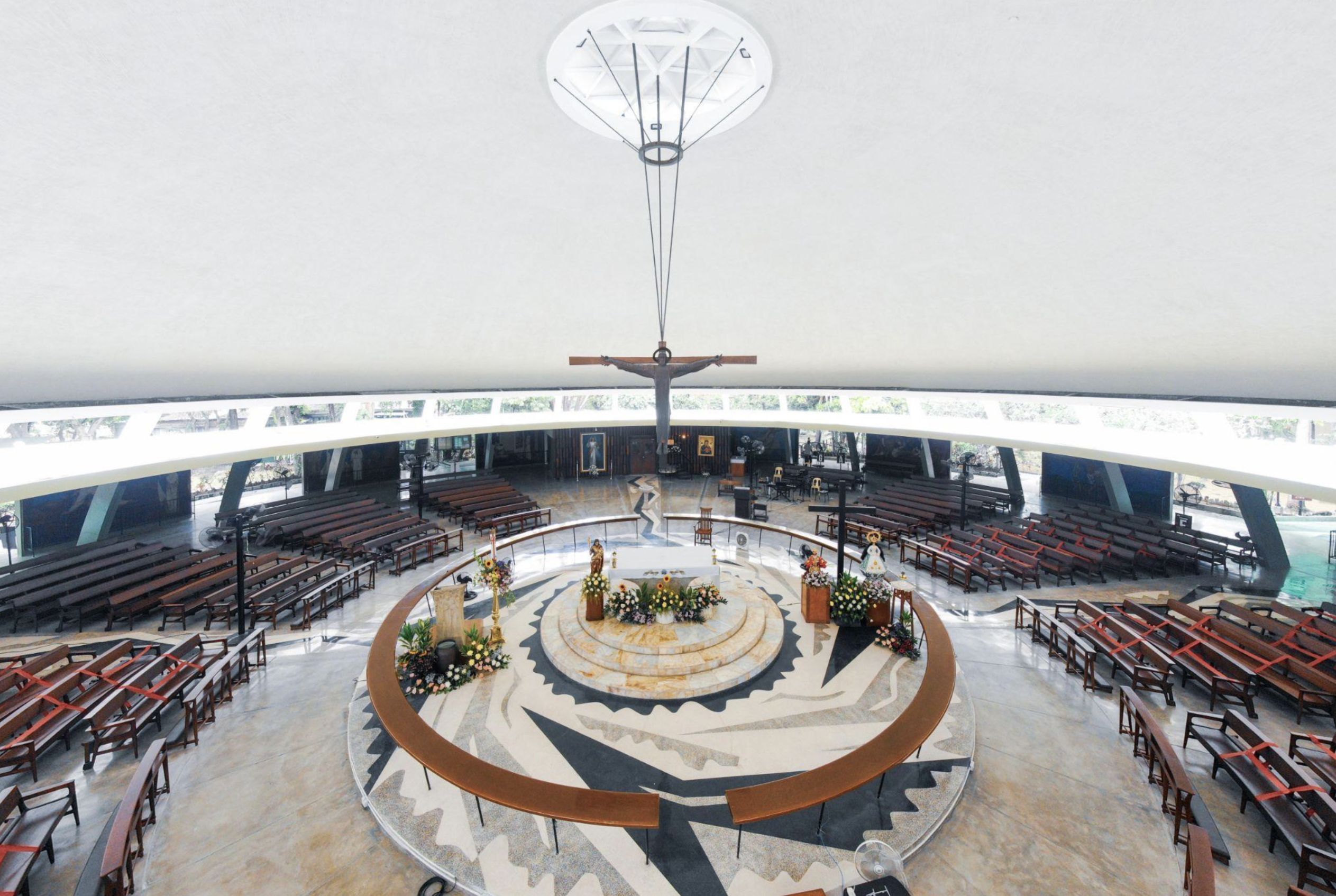
The design began with Fr. John Delaney’s vision of “a simple but strong building that would be open to the light.” Locsin transformed this idea into a modern circular church centered on communal worship. Rather than placing the altar at one end of the building, he positioned it at the center and arranged the seating in a radial pattern around it. This concentric design enables the faithful to gather equally around the altar, fostering a stronger sense of unity and participation during worship. The circular form also symbolizes equality, community, and the gathering of people around God.
https://www.archdaily.com/790290/ad-classics-parish-of-the-holy-sacrifice-leandro-v-locsin
At the time, Locsin was still a young architect beginning to establish his reputation. His involvement with the UP community and our parish became one of the defining moments of his career. Working with Fr. Delaney and structural engineer Alfredo L. Juinio Sr., Locsin designed the country’s first reinforced concrete thin-shell dome. The dome is supported by 32 arched columns arranged in a radial grid, creating a large open interior free from massive walls and columns. Because of its modern, hovering appearance and floating form, the church earned the nickname “the flying saucer.”
Inspired by Instaurare omnia in Christo—”to restore all things in Christ”— the UP Chapel was restored and canonically established as a parish on May 30, 1977, making the Eucharist the center of the community's faith and life. The parish is unique in the Philippines for integrating the works of multiple National Artists into a single worship space. At the center hangs the Cross by Napoleon V. Abueva, depicting both the Crucified and Risen Christ. Around the interior are the Stations of the Cross by Vicente S. Manansala and Ang Kiukok, while the floor mural River of Life by Arturo R. Luz flows outward from the altar toward the entrances of the church. Together, these artworks blend naturally with Locsin’s architecture, making the Parish both a sacred and artistic space.
https://banguilanbermido.home.blog/architect/
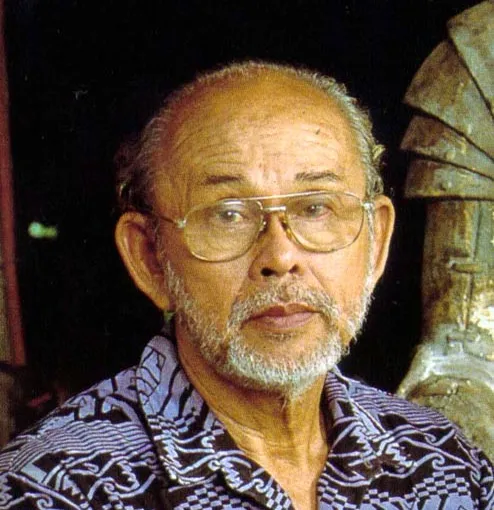
Locsin became one of the Philippines’ most influential architects and a key figure in modern Filipino architecture. Born on August 15, 1928, in Silay, Negros Occidental, he initially studied music at the University of Santo Tomas before transferring to architecture. His background in the arts is evident in the way he balanced structure, space, and simplicity. Aside from the Parish of the Holy Sacrifice, Locsin designed landmarks such as the Cultural Center of the Philippines (CCP), the Philippine International Convention Center (PICC), and the Tanghalang Pambansa. In recognition of his contributions to the Philippine Modern Architecture, he was proclaimed National Artist for Architecture in 1990.
Beyond its architectural innovation, our parish remains above all, a place of prayer and worship. Its open design, natural light, and unified space continue to guide the community toward reflection and spiritual connection. Through the vision of Leandro Locsin and the artists who contributed, the Parish of the Holy Sacrifice stands not only as a landmark of modern architecture but also as a living sanctuary where faith continues to gather and grow within the UP community.
References
- University of the Philippines Diliman. (n.d.). Parish of the Holy Sacrifice. Iskomunidad. Link
- ArchDaily. (2016, June 2). AD classics: Parish of the Holy Sacrifice / Leandro V. Locsin. Link
- Girard, J.-C. (2020). Religious tropical architecture: The churches of Leandro V. Locsin in the Philippines. Docomomo Journal, 63, 76–79.
- Fukuoka Prize. (1992). Leandro V. Locsin. Link
- National Commission for Culture and the Arts. (2015). Leandro V. Locsin. Sagisag Kultura. Link
- Architectuul. (n.d.). Leandro Valencia Locsin. Link
- ArchDaily. (2016, June 2). AD classics: Parish of the Holy Sacrifice / Leandro V. Locsin. Link
- University of the Philippines Diliman. (n.d.). Parish of the Holy Sacrifice. Iskomunidad. Link
- Girard, J.-C. (2020). Religious tropical architecture: The churches of Leandro V. Locsin in the Philippines. Docomomo Journal, 63, 76–79.
- Lopez, M. (2021, September 12). Interview with Msgr Manny 210912 [Video]. YouTube. Link
Chapter 3
River of Life
Where Eucharist Flows: River of Life by Arturo Luz
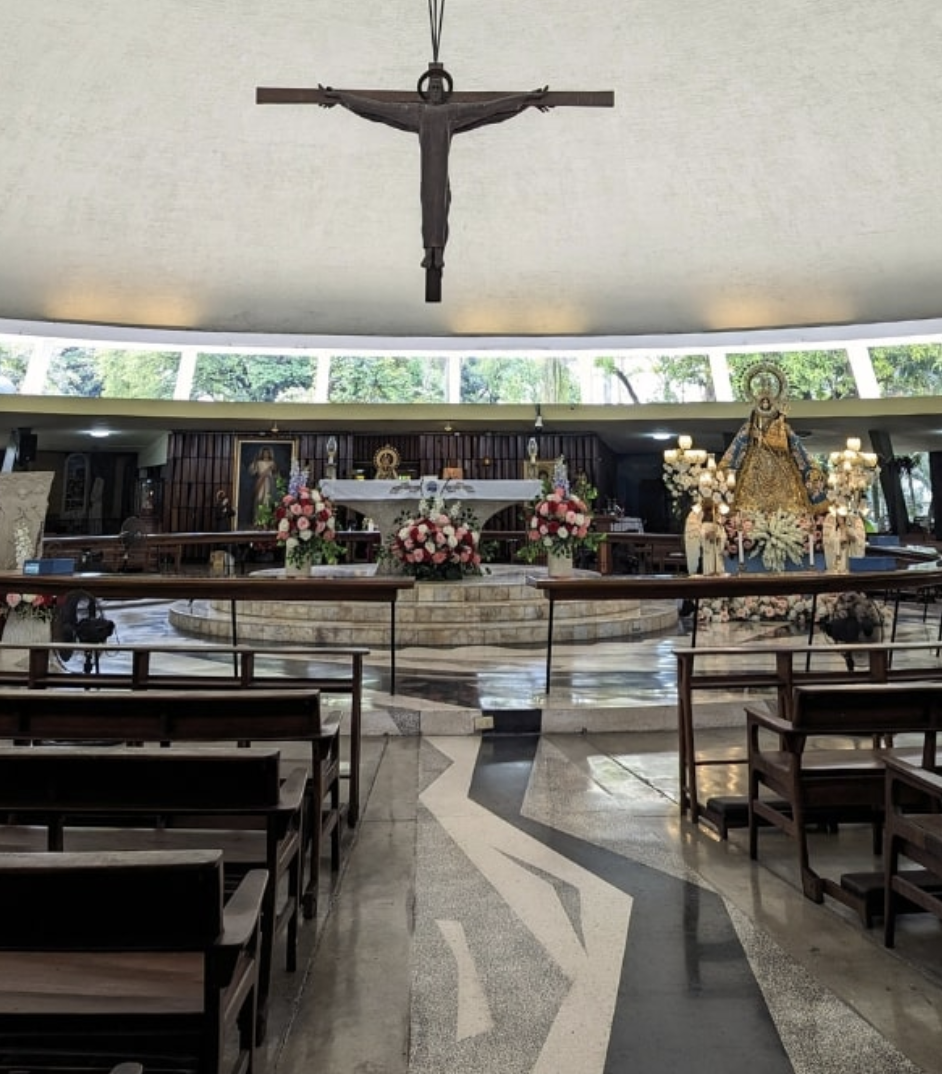
Upon entering the Parish of the Holy Sacrifice, one of the first artworks that quietly draws the eye toward the altar is the River of Life by Arturo R. Luz. Unlike many traditional sacred works that are placed on walls or ceilings, this mural is integrated directly into the church floor, making it part of the worship experience itself. Created in black, white, and gray terrazzo, the design features flowing geometric and zigzag patterns that radiate outward from the altar toward the church entrances. This outward movement harmonizes with the dome architecture designed by Leandro V. Locsin, naturally returning the community’s gaze to the center of worship.
https://www.spot.ph/arts-culture/the-latest-arts-culture/107484/up-diliman-church-five-national-artists-a4362-20231225
The mural can be understood to symbolize life flowing like a river from God, the source of all life. As the patterns spread outward across the floor, the artwork also reflects how faith extends beyond the church and into the larger UP community. More than an aesthetic feature, the River of Life becomes part of the spiritual journey of every person who enters the Parish.
https://newsinfo.inquirer.net/1437982/legacy-for-moderns-the-art-of-arturo-luz
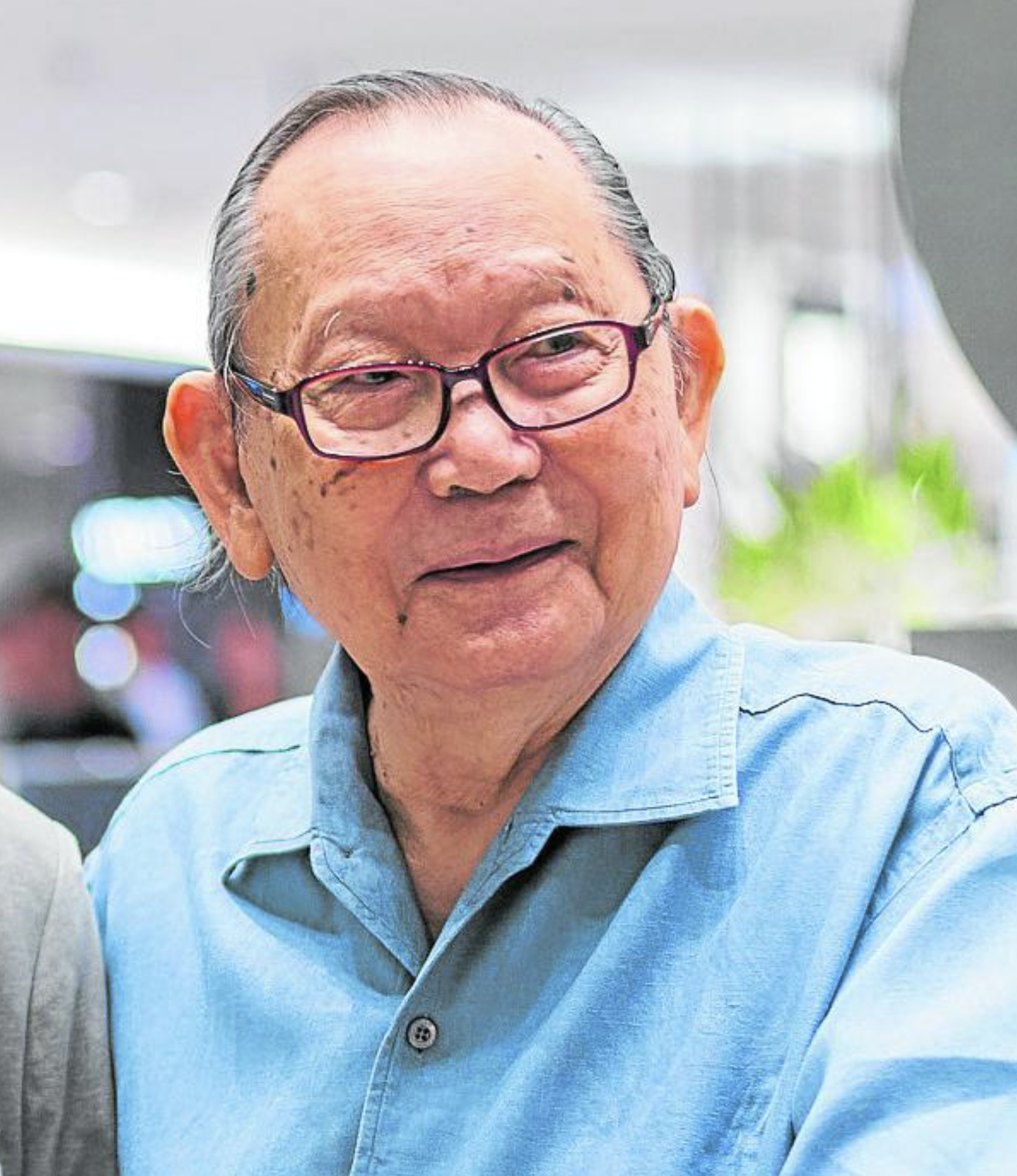
Arturo Luz became one of the leading figures of modern Philippine art because of his clean, balanced, and geometric style. His body of work includes paintings and graphic works, as well as significant service to Philippine art institutions. His connection to the university and to the parish community shaped the parish’s identity as a union of art, architecture, and faith.
Through the River of Life, Luz brought modern art into a sacred space without diminishing its spiritual meaning. Instead, his work strengthens the experience of communal worship within the church. To this day, the mural remains an important part of the parish, reminding visitors that faith—like a river—continues to flow beyond the walls of the church and into everyday life.
References
- University of the Philippines Diliman. (n.d.). Parish of the Holy Sacrifice. Iskomunidad. Link
- Lakansining. (2016, December 13). University of the Philippines, Quezon City: The art of the Parish of the Holy Sacrifice. Link
- Rodriguez, M. (2023, December 25). This church in QC holds the works of five National Artists. SPOT.ph. Link
- National Commission for Culture and the Arts. (n.d.). Arturo Luz. Link
- University of the Philippines Diliman. (n.d.). Parish of the Holy Sacrifice. Iskomunidad. Link
- Lakansining. (2016, December 13). University of the Philippines, Quezon City: The art of the Parish of the Holy Sacrifice. Link
- National Historical Commission of the Philippines. (n.d.). Church of the Holy Sacrifice. NHCP Registry of Historic Sites and Structures in the Philippines. Link
- SPOT.ph. (2023, December 25). This church in QC holds the works of five National Artists. Link
- Lopez, M. (2021, September 12). Interview with Msgr Manny 210912 [Video]. YouTube. Link
Chapter 4
Stations of the Cross Paintings
The Way of the Cross: Strokes from Salvation
On the walls of the Parish of the Holy Sacrifice are vibrant images depicting the fourteen Stations of the Cross, along with a fifteenth image showing the Resurrection and Ascension of Jesus Christ. The sequence begins on the left wall of the sacristy and continues around the parish to the right wall on the other side. The stations follow the traditional order of the Way of the Cross.
The first image shows Christ condemned by Pilate. The second image shows the servants of Rome handing the cross to Christ, with Virgin Mary witnessing the beginning of her son’s suffering as he is given the wooden cross to bear. The third image depicts Christ’s first fall. The fourth portrays Jesus meeting his mother on the way to Calvary, with Mary kneeling in an expression of grief.
The fifth station further reminds how the human body of Christ suffered, an image in which Simon of Cyrene is compelled to carry the cross. The sixth shows three groups of figures — Jesus still bearing the cross, the Virgin Mary and Mary Magdalene, and Veronica who wiped the face of Christ. The seventh station depicts Christ’s second fall, with the two women following him.
The eighth image shows Christ speaking to the women of Jerusalem. In the ninth painting, it shows Christ falling again, while Roman soldiers push him to stand, and a scourger is also depicted with a whip in his hand. The tenth station shows Jesus being stripped of his garments, fulfilling the prophecy written in the book of Psalms: “They divide my garments among them, and for my raiment they cast lots.” (Psalm 22:18).
In the eleventh station is the painful image depicting Jesus being nailed to the cross, and the twelfth shows his death on the cross. In the scene, the Blessed Virgin Mary and Mary Magdalene are shown with their heads tilted toward heaven, hands clasped in prayer. The thirteenth image shows Jesus being taken down from the cross after Joseph of Arimathea asked for his body for burial. On the final station, Jesus is laid in the tomb by his followers.
The last image in the series of paintings depicts Jesus’ ascension to heaven. This addition brings hope and joy to those who walk with Christ in their own reflections through the help of these paintings.
These paintings reflect the brilliant strokes of National Artists Vicente Manansala and Ang Kiukok. Manansala was an alumnus of the BA Fine Arts program of the University of the Philippines, College of Fine Arts, graduating in 1930. Ang Kiukok studied at the University of Santo Tomas from 1952 to 1954, where he met Vicente Manansala, who was his teacher in watercolor painting. He and his mentor Manansala, were commissioned to create the murals of the Stations of the Cross murals around the construction of the chapel in 1955-1956.
References
- 91st Birth Anniversary of Ang Kiukok. National Museum of the Philippines. (2022, March 1). Link
- Ang Kiukok. Finale Art File. (n.d.). Link
- Ang Kiukok. CulturEd: Philippine Cultural Education Online. (n.d.). Link
- Birth Anniversary of National artist Vicente Manansala. National Museum of the Philippines. (2022, January 22). Link
- Cathedral of Our Lady of the Holy Rosary. (n.d.). The Way of the Cross by St. Alphonus Liguori.
- Vicente S. Manansala. Bangko Sentral ng Pilipinas. (n.d.). Link
- Vicente Silva Manansala: A Cubist painter and illustrator. The Kahimyang Project. (2024, March 6). Link
Chapter 5
Stations of the Cross Hand Sculpture
The Hands of God
Around our parish, devotees—and those who happen to pass by—may notice short stone columns with hands on top. Unlike the painted Stations by Manansala and Kiukok, this work depicts the Stations of the Cross, by Pope Paul VI in 1975. The stone columns also feature metal crosses along their length indicating the order of the stations and the scenes meant to be represented by the hands.
The first station shows hands being held out as if to receive, pointing to the last supper where the disciples partook of bread and the wine. The second station shows hands cowering in fear, depicting Christ’s suffering in the garden of Gethsemane, as he was captured. This ties to the third station, which shows two arms bound together, depicted through rope marks that left an imprint on the skin.
The fourth station shows a hand gripping a stump of wood, while another hand has seemingly let go; the grips leave visible imprints. This scene alludes to Jesus’ suffering under Roman scourging prior to his crucifixion.
The fifth station shows two hands flexed and tilted as if holding something, depicting the way Christ held the cross in he bore it for the sins of the world. Flowers sometimes placed on the fingers reflect small acts of sacrifice. Be it an act of piety, appreciation, or simply as a quiet way of following those who have done so before, it is, nevertheless, a heartwarming scene preserved for those who walk the Way of the Cross.
The sixth station shows a handprint in the dirt, indicating Christ’s first fall, which connects to the seventh station where the Roman soldiers compelled a bystander—Simon of Cyrene—to carry the cross with him, lest Jesus dies before reaching Calvary. The eighth station depicts hands reaching outward. This scene is derived from Jesus’ encounter with the women of Jerusalem, where he comforts them through a call to repentance rather than to wallow in grief.
The ninth station shows a painful image of a hand contorted in pain as a nail punctures through it, portraying Jesus being nailed to the cross. The tenth station shows two hands clasping at the wrist, symbolizing the repentant thief who was crucified with Christ, whom Jesus assured: “Truly, I tell you, today you will be with me in Paradise” (Luke 23:43).
The eleventh station is a set of hands—one as if aiding the other. The scene meant to be depicted here is the dialogue between Jesus and Mary and John at the foot of the cross, in which he entrusts his mother to the care of his disciples, and later entrusts his disciples—and, in time, his church—to the care of his mother.
The twelfth station is a grotesque image of a hand with a large tear on the skin depicting Jesus’ death on the cross. The thirteenth station depicts his burial in the tomb: a hand half-buried in soil, with burial cloths around it. The final station is the hand of benediction; behind it is an imprint that signifies the Resurrection. The scene meant to be depicted is the Resurrection of Christ, and the blessing he gives his disciples when he says: “Peace be with you. As the Father has sent me, even so I send you.” (John 20:21).
These stone sculptures are part of Maria Laura Ginoy’s installation titled, “Via Crucis: A Synecdochal Rendition of the Way of the Cross.” Placed along the planting beds that border the main walkway around the parish, they offer an artistic reminder of our own walk with Christ and our call to share in his holy and living sacrifice.
Chapter 6
Adoration Chapel
The Chapel of Perpetual Adoration
Below the parish church, down the staircase just behind the sacristy, are two rooms with glass doors. One room houses some of the many statues the Parish has acquired through its history; the other is an airconditioned chapel lined with chairs fitted with kneelers.
These rooms were initially built as mortuary chapels in 1985. It was not until Msgr. Ramon C. Arguelles, a former parish priest, granted permission for the perpetual exposition of the Blessed Sacrament that the chapel was renovated and reintroduced as the Chapel of Perpetual Adoration.
Inside the Adoration Chapel, one may observe an altar draped in cloth and, most prominently, a large wooden cross sculpture adorned with intricate designs that occupy most of the far wall. Embedded within its design is a lamb, shown open to reveal the Blessed Sacrament within.
The two sculptures—and the tabernacle door in the main church—were created by Toym Leon Imao, a multi‑awarded artist, educator, and advocate for artists’ rights. His career spans more than forty years and includes work in sculpture, painting, architectural design, and large‑scale public monuments, among others. These pieces were donated at Easter 2024, allowing people to go deeper in prayer and appreciate more fully the glory of God’s works through the love shared by others.